
Finding Lodi Residents From a Name
Use the record that fits the question. An address is the strongest starting point for a parcel, assessment, or deed trail. A full name and time period can be compared with a court index, dated directory, probate file, or state verification service. Lodi is a Bergen County borough, so a municipal office, the County Clerk, and a state agency often hold different pieces of the same trail. Keep the source date and the record role, such as owner, grantor, party, or listed householder.
Public sources do not establish every household connection. An assessment owner may use a different mailing address, a recorded deed may concern a former owner, and a historical directory is limited to its edition. The safest result comes from two independent records that agree on a name, date, and location. Start with a narrow search, then ask the named custodian about a specific record rather than requesting a broad personal file.
- For an address, search the Lodi assessment record and save its block, lot, and qualifier.
- Use the Bergen parcel map to compare the tax identifiers with the mapped parcel.
- Search the County Clerk index for the recorded instrument, then note its parties and date.
- For a past household, check a dated directory or repository finding aid before drawing a timeline.
- When an index ends, make a focused request to the office that actually keeps the record.
Lodi Assessment Search Fields
The borough directs property searches to the public Lodi assessment system. Its instructions say to select Bergen County and Lodi, then use the key that best identifies the parcel. For an address, enter the number and street name without a common suffix. The portal also supports an owner-name route and the tax-map keys. A returned assessment card is useful for tying a name to a parcel at an assessment date, but it is not proof that the named owner currently occupies the property.
| Portal field | How Lodi describes it | Best use |
|---|---|---|
| Location | Number and street name, without a suffix | Start from a known address |
| Owner Name | Owner last name plus street is the suggested alternate | Refine a common surname |
| Block and Lot | Tax-map identifiers used together | Match a parcel across records |
| Qualifer | Portal spelling; chiefly useful for condominium records | Separate units sharing a lot |
The borough's assessment-search instructions explain the sequence, and the Lodi assessment portal is the live tool. Its observed actions include Submit Search, More Info, and Assessment Postcard. The research did not establish a formal historic coverage date, every menu option, or an export function, so those details should be checked in the live result.
For a view of the borough's official records routing, see the Lodi borough home page before starting a search.
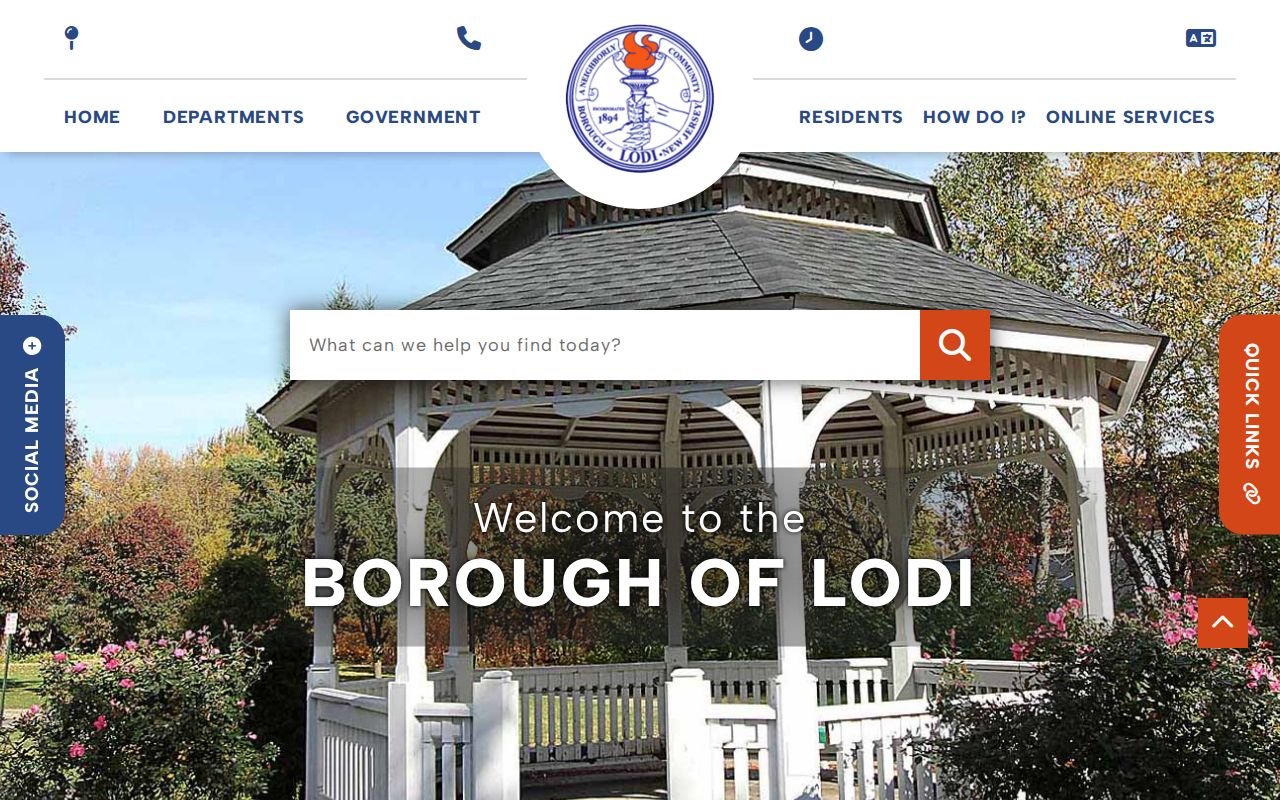
The borough page helps distinguish municipal routing from the separate county and state systems used later in a Lodi records search.
Lodi Offices Behind Resident Records
Begin with the government level that owns the record. The Borough Clerk is Lodi's general municipal custodian and the local registrar for qualifying vital events. The Tax Assessor maintains assessment routing. Bergen County keeps land instruments and parcel mapping, while election questions may belong with the county offices or New Jersey's voter system. The office names matter because a municipal clerk cannot substitute for the County Clerk, the court, or a protected state record custodian.
Bergen County Clerk Land Records
One Bergen County Plaza
Hackensack, NJ
201-336-7000
Lodi Tax Assessor
Room 103, One Memorial Drive
Lodi, NJ 07644
973-859-7415
Bergen County Board of Elections
One Bergen County Plaza, Room 310
Hackensack, NJ
201-336-6225
Lodi Parcels and Bergen Deeds
Three related records answer different questions. The assessment search identifies the tax record. The Bergen County Parcel Viewer supplies map context, and its published REST layer can expose address, PAMS PIN, municipality, block, lot, qualifier, acreage, tax-map, and update attributes. The County Clerk land-record index documents instruments such as deeds, mortgages, assignments, satisfactions, and releases. Save the identifiers from each system instead of treating any one of them as a complete resident record.
The County Clerk says its online land-record coverage starts January 1, 1970. The index supports party name, document group, date range, book and page, clerk's file number, consideration, legal town/lot/block, and map searches. Older instruments are not presumed absent. They may require the Clerk, New Jersey State Archives, FamilySearch catalog, or the Bolger Heritage Center. The full address-led process belongs on the Lodi street directory guide.
Lodi OPRA Requests That Work
When a needed municipal record is not posted, use Lodi's Open Public Records Act instructions for a clearly described government record. The local route identifies Borough Clerk Rebecca Paladino in Room 202. A useful request specifies a record type, department, date range, and an address, block and lot, or file number where known. It is not a tool for asking an office to assemble information about a person.
New Jersey's OPRA is N.J.S.A. 47:1A-1 et seq. The general response framework is as soon as possible and no later than seven business days, subject to distinct rules for archived material and Daniel's Law or commercial-purpose review. Lodi lists $0.05 letter-size and $0.07 legal-size copies, with actual media cost and possible approved special service charges. Police records use a separate custodian and form, while court and vital records follow their own procedures.
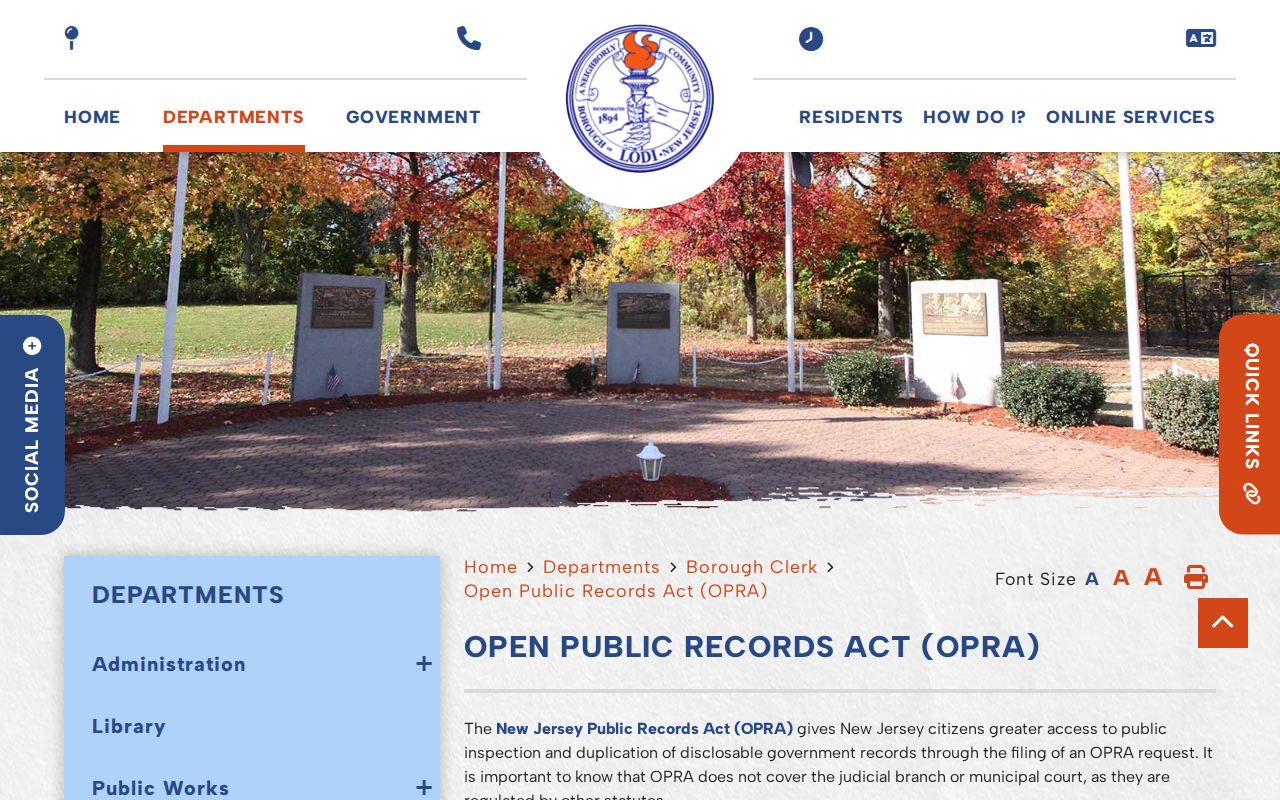
The borough's OPRA page is the right reference for municipal record requests, but its exemptions still protect items such as Social Security numbers, unlisted numbers, and driver-license data.
Current Lodi Sources for Residents
There is no single official Lodi roster. The sources below are narrower lists or indexes with different access rules. A property record can link an owner to a parcel. A voter system may confirm limited registration status where access allows. A recorded instrument shows its parties, while a court index shows case information only in the correct category. Treat each result as a dated record with a defined role, never as a complete profile.
| Source | Who It Lists | Keeper | Access |
|---|---|---|---|
| Lodi assessment record | Owner and parcel relationship | Tax Assessor | Public portal; no occupancy proof |
| Bergen parcel data | Parcel geography and tax identifiers | County GIS | Public viewer; lines are not surveys |
| Bergen land index | Parties to recorded instruments | County Clerk | Online from 1970; older route differs |
| New Jersey voter route | Limited status and election administration data | State and county election offices | Restricted fields and redactions apply |
| Library and repository holdings | Dated directory and newspaper leads | Lodi Library and Bolger | Collection and access vary by item |
For a single person, first establish a name, time period, and one independent connection, then compare two record types. The Lodi resident lookup guide explains that verification sequence in more detail. A court hit, an entity filing, or an unclaimed-property match alone is not confirmation of a current Lodi address.
The New Jersey Unclaimed Property search is a free state route for a possible name and prior-address match.
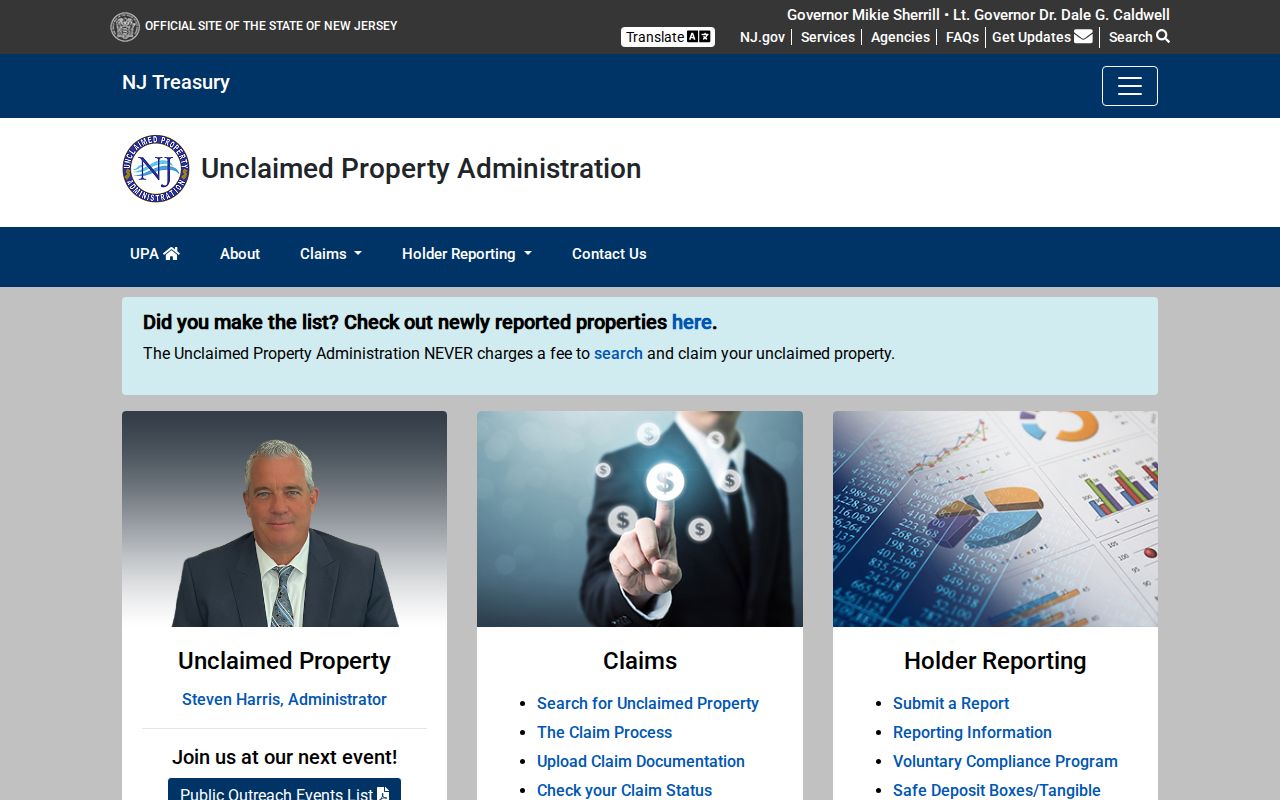
A result can support a carefully dated research lead, but a claim requires proof and does not verify that the person currently lives in Lodi.
Lodi Voter and Court Record Routes
New Jersey's official voter registration-status service is a limited status route, not a public address book. The live field labels did not render during the research capture. State law describes a broader system that contains sensitive identifiers, signatures, and other restricted data, while OPRA requires protections including Daniel's Law redactions. A result or a no-result should be treated cautiously, and permitted public-data questions can be routed to the Bergen County Board of Elections or Superintendent of Elections.
Court research also splits by system. The New Jersey Courts gateway routes civil, foreclosure, criminal, judgment lien, Tax Court, and municipal matters to different searches. Lodi Municipal Court handles local tickets and ordinance matters, but ordinary borough OPRA is not its record process. Federal matters are in PACER. A case caption or party-name result identifies a court record; it does not prove that people with the same name are the same person.
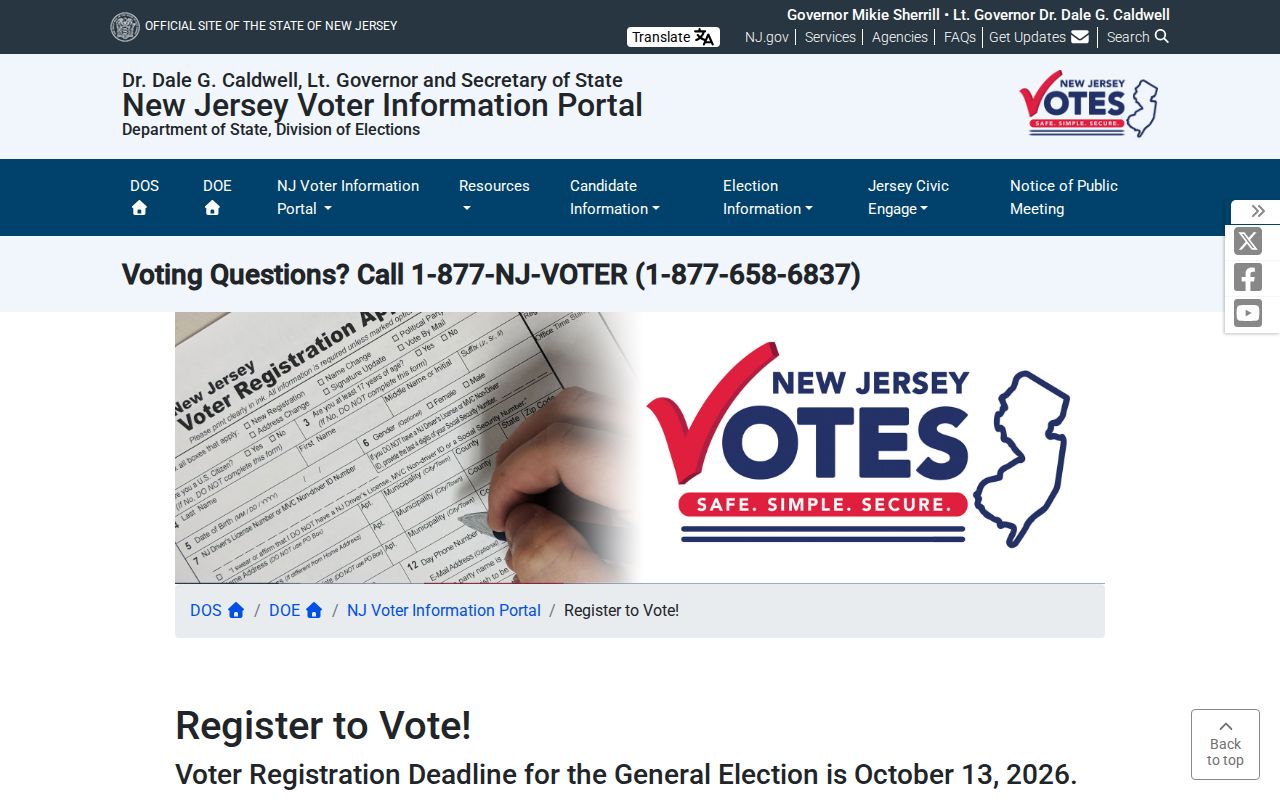
The state registration page provides official process information, while field-level access and record availability remain subject to the law that governs voter data.
Verifying Lodi Results With Care
Official records and commercial compilations are not substitutes for each other. A custodian's index states what that office recorded, with its coverage and redactions. Commercial tools can combine public and brokered data, charge for access, retain stale addresses, and merge people who share a name. A careful Lodi search uses the official record first, preserves the date and the custodian, and checks a second independent record only when the comparison is lawful and relevant.
For example, a historical directory can suggest a street and year. The assessment roll can then identify the parcel, and the County Clerk index can locate a recorded transaction. That sequence is stronger than relying on a single undated profile. It still does not establish every resident of the address. If legal proof is required, request the certified copy or consult the appropriate professional rather than relying on a screen result.
Lodi Privacy and Protected Addresses
Public availability has limits. Lodi's OPRA instructions identify protected personal information, and New Jersey imposes separate rules for vital records, court files, voter material, motor-vehicle data, sealed matters, and protected addresses. The New Jersey Address Confidentiality Program provides qualifying participants a substitute address for state and local agency use. That substitute is not evidence of where a person lives, and the program cannot erase an address that was lawfully public already.
Daniel's Law can affect owner fields in parcel data and other public records. Never use a directory search to watch, threaten, harass, or harm another person. Use a narrow record for a lawful personal purpose, such as family history, an estate question, reconnecting with a classmate through an appropriate source, or confirming the government office that holds a document.
Historical Directories for Lodi Residents
Lodi's historical trail often leaves the live portals and moves into library and archive collections. Lodi Memorial Library identifies a Lodi Directory of 1933 by Peter M. Galanti and refers to former historian Lawrence Toscano's archives. The research did not locate a digitized page or a verified shelf record, so the responsible next step is to ask library staff for the edition, locality heading, and access method. A listing should be described as a person or household at an address in that edition, not as a current record.
The Newberry city-directory guide lists Lodi for 1910 and 1915 and groups Lodi/Passaic material for 1920 through 1922 under Passaic. This catalog detail matters. Older material may use Lodi Township, a neighboring post office, or another locality label. The complete collection guide, sample-entry conventions, and household-tracing method are collected on the Lodi city directories page.
Lodi's 1933 Directory Lead
The 1933 directory is unusually specific local evidence because the library history page names the publication and its compiler. It can provide a starting point for a family-history or house-history question, especially when paired with its edition date and an original page reference. Yet it should not be overstated. The research did not verify whether entries are alphabetic, street-based, or both, and it did not open a Lodi page to confirm the abbreviations or every printed field.
Regional directories help explain what to look for. Google Books describes W. A. Boyd's Bergen County Directory of 1887, whose available snippets show a name, occupation, and house address. Its use of h for house or home is a regional model only, not a transcription from Lodi. Preserve the entry exactly as printed, then record the volume, year, page, locality heading, and repository before comparing it to a modern parcel.
Current municipal routing and historic library work complement each other, but each source should retain its own date and purpose.
Lodi Library and Bolger Access
Lodi Memorial Library is the local bridge to historical photos, BCCLS resources, library databases, and local-history questions. Its online-services page describes library-only Ancestry access and ReferenceUSA among its research services. Those are discovery tools, not official government records. Hours and facility notices can change, so confirm current availability with the library before traveling or relying on a database session.
For a deeper Bergen County search, the Bolger Heritage Center offers directories, newspapers, maps, church histories, family files, vital-record copies, and on-site databases. Original historic books, maps, and manuscripts are appointment-only. The New Jersey State Archives and FamilySearch collections are further channels when an older land, probate, naturalization, or newspaper trail needs a catalog search. A source that is only a finding aid should be labeled that way.
Lodi History Changes Search Terms
Local history gives a useful search clue, not a shortcut to identity. Lodi Township was organized in 1825 and the borough was incorporated on December 22, 1894. The library history also describes Robert Rennie's nineteenth-century printing and dyeing operation, Saddle River water rights, a company store, chemical works, and later railroad connections. Old newspapers, maps, deeds, or photographs may therefore be indexed by industrial terms, a mill, a railroad, or Lodi Township rather than a present borough address.
These details can improve a repository search for a building, business, or family history. They cannot show that a worker, customer, or surname in a historical source lived in Lodi. Add Bergen County and New Jersey to catalog searches, preserve the source's spelling, and compare an old location with a legal description or map before treating it as the same property. That modest approach keeps an appealing local story tied to the evidence.