
Lodi City Directory Collection Leads and Access
Several dated leads form the starting shelf for Lodi research. They are not a continuous run, and the research does not verify that every listed item is digitized or open for walk-in browsing. The table separates confirmed metadata from access that still requires a catalogue check or a conversation with the repository. Keeping that distinction prevents a useful lead from becoming an overstated collection claim.
| Collection | Years | Where held | Access |
|---|---|---|---|
| Lodi Directory, Peter M. Galanti | 1933 | Lodi Memorial Library history and former historian archives lead | Ask library or local-history staff; shelf and scan status are unverified |
| Lodi and Lodi/Passaic city-directory material | 1910, 1915, and 1920-1922 grouping | Newberry city-directory guide | Inspect the cited item and metadata before citing a page or publisher |
| Boyd's Bergen County Directory, W. A. Boyd | 1887 | Google Books | Regional preview and search lead, not a confirmed Lodi entry |
| Regional telephone-directory leads | 1930-31, 1948, 1954, 1959, 1960-61, 1961, 1971, 1973-74, 1974 | Bolger Heritage Center and GSBC finding aids | Repository lead only; Lodi inclusion varies by volume |
Exact first and last Lodi editions, a complete criss-cross run, and a verified digital image set were not located. That absence matters: note the edition consulted and the source that supplied it instead of inferring a publication gap or a shelf location.
The 1933 Lodi City Directory Lead
The Lodi Memorial Library history page identifies a Lodi Directory of 1933 published by Peter M. Galanti and connects that history to former historian Lawrence Toscano's archives. This is a specific local lead, but the research did not verify a physical shelf location, an opened page, or the full entry format. A careful request asks staff whether the volume is physically held, whether it belongs to the archived material, and whether a non-sensitive page scan or citation can be provided.
The library is a practical first stop because it also describes local-history resources, historical photographs, BCCLS access, and library-only research databases. Its posted regular hours are Monday, Tuesday, and Thursday 10 a.m. to 8 p.m.; Wednesday, Friday, and Saturday 9:30 a.m. to 5 p.m.; and Sunday closed. Temporary notices can change those hours, so check the current library page before a visit.
A view of the library's Lodi history material shows the source behind this local-directory lead.
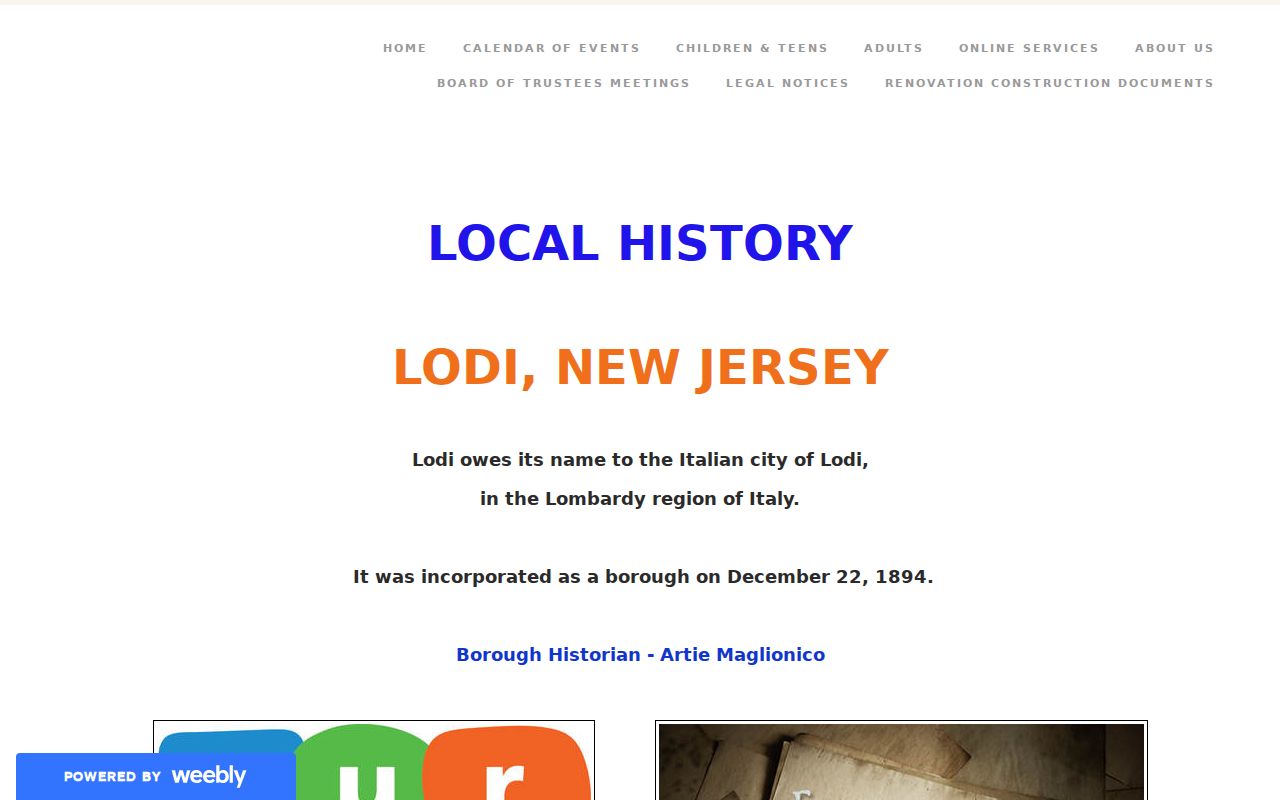
The page supports the existence and attribution of the 1933 lead, while leaving the actual directory page, its alphabetical arrangement, and detailed abbreviations for staff or item-level verification.
Lodi City Directories in Newberry's Passaic Grouping
The Newberry city-directories guide lists Lodi for 1910 and 1915, then directs researchers seeking Lodi/Passaic material for 1920 through 1922 to the Passaic grouping. This is a catalogue route, not evidence that a person in one of those books lived in Passaic. Preserve the locality line printed in the item and search under Lodi, Lodi Township, Passaic, Bergen County, and relevant post-office terms when a known name does not appear on the first pass.
Newberry describes its directory collection as strongest roughly from 1870 to 1930 and as including city, county, fraternal, business, society, and telephone directories. The guide does not expose every title page, publisher, or scan. Before recording a citation, verify the actual volume's title, place, year, page, and locality heading.
How to Read a Lodi City Directory Entry
No local 1933 or Newberry entry was opened during research, so the field inventory below is a capture checklist rather than a description of a verified Lodi layout. The regional model comes from Boyd's Bergen County Directory, an 1887 W. A. Boyd publication. Its snippets show a name, occupation, and house address; in that regional convention, h means house or home. It must not be represented as a Lodi listing.
| Name as printed | Copy surname and given name exactly, then keep any normalized spelling in a separate note. |
|---|---|
| Occupation or business | Record it only if printed, with the business wording preserved as part of the dated entry. |
| Street and number | Capture the address and locality heading together, because historical labels and present-day municipal labels can differ. |
| Household notation | Note spouse, widow, owner, or boarding wording only if the examined volume actually contains it. |
| Edition evidence | Keep title, publisher, year, page, abbreviation key, repository, and scan status with the transcription. |
- Criss-cross directory
- A reverse arrangement keyed by street and address rather than by a person's name. No exact Lodi title or year has been verified.
- Householder index
- An index that points to the named household in a volume. Whether a particular Lodi directory has one must be checked in that edition.
- Abbreviation key
- The publisher's explanation of shorthand, usually near the front or back. Photograph or transcribe it before interpreting the entries.
Lodi City Directory Leads at Regional Repositories
The Bolger Heritage Center and Genealogical Society of Bergen County describe holdings that include local newspapers, directories, maps, church histories, family files, vital-record copies, periodicals, and on-site databases. Original historic books, maps, and manuscripts are appointment-only. The society also offers lookup services and consultations, which are useful fallback channels when a catalogue hit is not available online.
A view of the Bolger Heritage Center collection page illustrates the regional repository that supports these directory and newspaper leads.
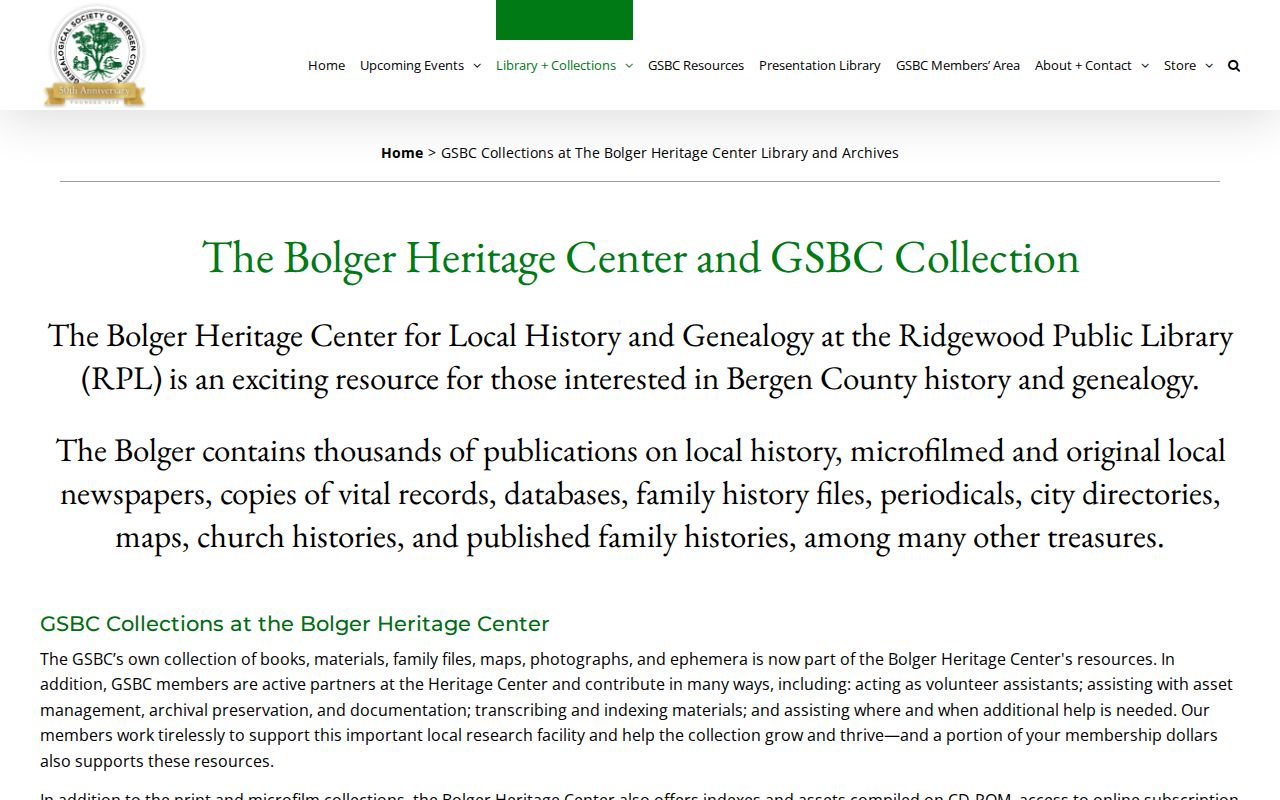
The holdings point to several ways of extending a dated directory entry, but they do not establish a particular Lodi reverse directory, newspaper title, or year without checking the requested item.
The Bergen County Historical Society is another county-level historical lead. Its public site did not reveal exact Lodi directory holdings during this research, so a request should identify the proposed date range and ask what local catalogues, maps, or historical publications can be consulted.
A view of the Bergen County Historical Society site documents the separate historical-society lead.
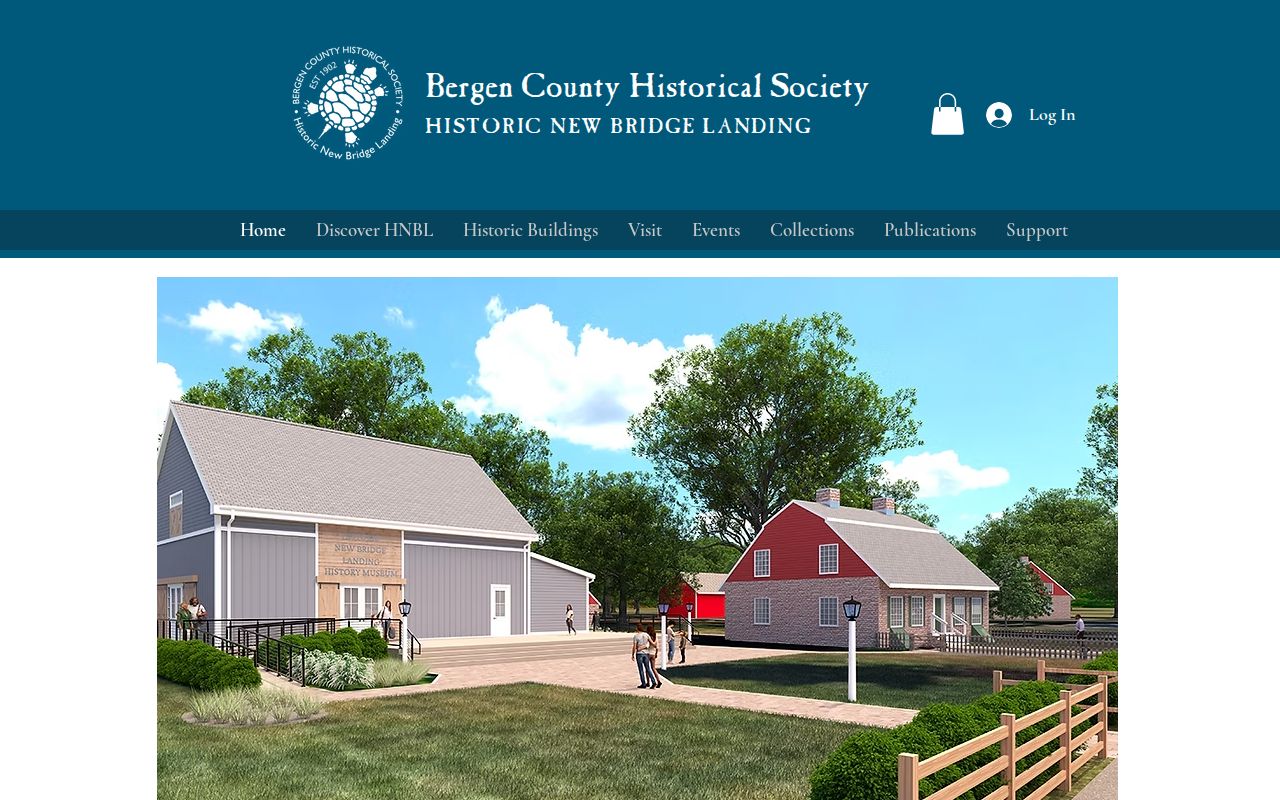
It is a useful place to ask about county context, while the scope of Lodi-specific directory materials remains a documented gap.
Lodi City Directories and Changing Locality Labels
Lodi's borough incorporation on December 22, 1894 followed the earlier Lodi Township, organized in 1825. An older directory, newspaper, deed, or family paper can therefore use a locality label that does not match a present-day address. That is why an unsuccessful exact search should be widened with the source's own spelling, Lodi Township, Bergen County, Passaic references, and nearby post-office wording before it is treated as a negative result.
Do not use a catalogue's Passaic grouping as proof that the subject belonged to Passaic. Compare the street, occupation, household clues, date, county, and any accompanying locality line. A match on surname alone is weak, especially when a common name appears in nearby communities.
Rennie's Lodi Directory Search Terms
Lodi Memorial Library's history connects Robert Rennie, who settled in 1829, with printing and dyeing, Saddle River water rights, calico and foulard-silk production, a company store, chemical works, and later railroad context. Those terms can help find a directory, newspaper, map, or business reference when a modern civic address is absent. They are context clues, not evidence that a named person lived in Lodi.
For a historical note, record the exact source date and place name alongside any mill, river, rail, or business term. Then compare it with a directory locality heading or a primary document before connecting it to a household. This preserves the distinction between a local industrial story and an individual's residence.
Tracing Family History Through Lodi City Directories
A dated Lodi volume is most useful when treated as a sequence. Start with the earliest verified edition that can be consulted, build a small citation for each appearance, and compare each jump with the appropriate Census decade. The method reveals changes in spelling, street, occupation, or household wording without claiming that a missing entry proves a move, a death, or a complete household count.
- Locate a name in a verified edition and record the title, locality heading, page, and entry exactly as printed.
- Check the next available Lodi, Lodi Township, or Passaic-grouped year, retaining address and abbreviation changes.
- Inspect a reverse or criss-cross section only when the particular volume is confirmed to have one.
- Pair the dated entry with the relevant Census year, newspaper notice, parcel context, or probate index rather than relying on a surname alone.
- Record an absence as an unconfirmed gap, then ask the library or repository whether an alternate edition, microfilm, or finding aid exists.
For estate-focused research, the FamilySearch Bergen probate catalogue identifies 1714-1962 probate material that begins with a docket or index. Probate is not a directory, but its file reference can help corroborate a dated historical trail.
A Timeline for Lodi City Directory Research
The dated points below are research anchors, not a claim that every intervening edition survives or is accessible. They help organize a request to the library or a regional repository and make it clear where the record trail is confirmed and where it needs item-level checking.
| 1825 | Lodi Township organization, useful context for older locality labels. |
|---|---|
| 1894 | Lodi borough incorporation, another reason to preserve the locality wording printed in a source. |
| 1910 and 1915 | Newberry guide lists Lodi, NJ directory material. |
| 1920-1922 | Newberry directs Lodi/Passaic material to the Passaic grouping. |
| 1933 | Lodi Memorial Library history identifies Peter M. Galanti's Lodi Directory. |
| 1930s-1970s leads | Regional telephone-directory runs are reported by Bolger/GSBC, with Lodi coverage to be verified volume by volume. |
Insider tip: Library databases and historical-repository catalogues are discovery tools, not official proof. Save a screen or written citation for the directory edition, then verify a significant conclusion with the original item or the appropriate custodian.